How to Choose the Best Dad Fishing Hat for Sun Protection?
Choosing the best Dad Fishing Hat for sun protection involves more than picking a wide brim and a familiar style. On a bright lake, reflected sunlight can reach the face, ears, and neck from several angles. A practical hat should offer a broad, stable brim, breathable fabric, and a secure fit during casting or boat movement. Look for a stated UPF rating, preferably UPF 50+, rather than trusting vague phrases like “sun safe.”
Comfort also affects protection. A hat that feels hot may be removed after thirty minutes. Mesh ventilation, moisture-wicking fabric, and a soft sweatband can help during long afternoons beside the water. Adjustable straps are useful when wind rises, while darker under-brim fabric may reduce glare. Small details matter.
Real fishing experience reveals compromises. Very wide brims can block peripheral vision, especially when checking a lure or watching a float. Lightweight materials may dry quickly but lose shape sooner. Some hats look protective online yet sit too loosely in person. That is easy to overlook. Checking the measurements, brim width, fabric label, and return policy creates a more reliable purchase decision.
Sun protection also depends on behavior. Reapplying sunscreen, wearing sunglasses, and seeking shade remain important, even with a high-quality Dad Fishing Hat. No single hat solves every exposure problem. The strongest choice balances tested protection, steady fit, ventilation, and personal comfort. A slightly imperfect hat worn consistently may protect better than an impressive one left at home.
Define the Sun Protection Features of a Dad Fishing Hat
How to Choose the Best Dad Fishing Hat for Sun Protection?
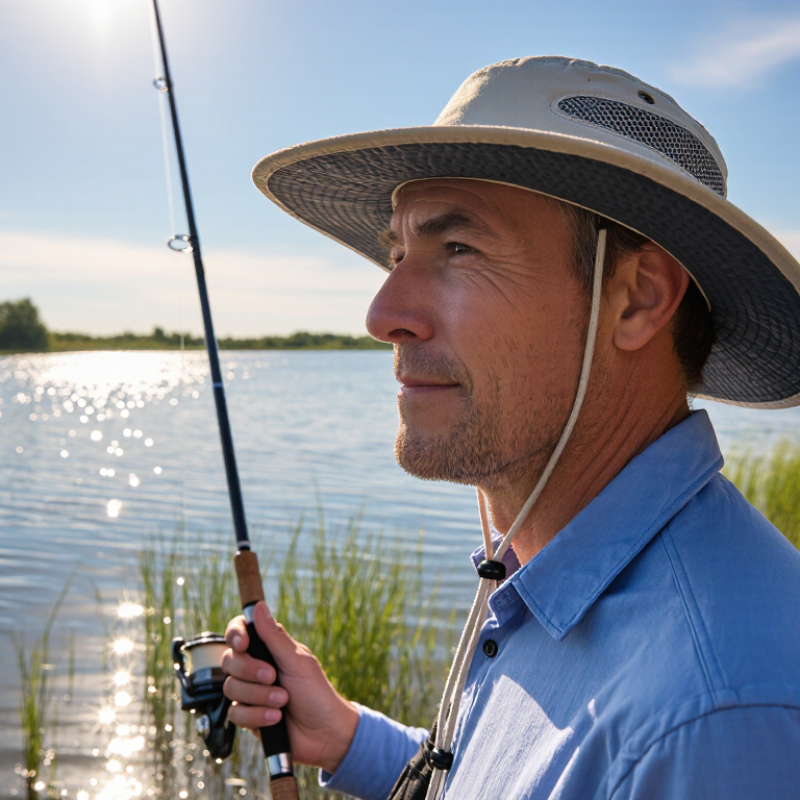
A dad fishing hat should protect more than the top of your head. The World Health Organization reports that ultraviolet radiation causes millions of non-melanoma skin cancer cases worldwide each year. A wide brim helps shade the ears, cheeks, and neck, where reflected sunlight can still reach. Cancer Council Australia recommends a brim of at least 7.5 centimeters for broad-brimmed hats. Bucket-style hats should have a brim of at least 6 centimeters.
Look for fabric labeled UPF 50+ and tested under a recognized textile standard. UPF 50+ allows only about 2% of ultraviolet radiation through the fabric. That matters during long hours beside bright water. A tightly woven polyester or nylon shell usually dries faster than cotton. Add a dark under-brim, because it can reduce glare reaching your eyes. Comfort still matters. A sweaty hat often gets pushed backward, exposing the forehead.
Do not trust one feature too much. I once chose a hat with excellent fabric ratings but a loose fit. Wind kept lifting it. An adjustable chin cord, breathable side panels, and a detachable neck flap can improve real-world protection. However, mesh panels may allow more UV through than solid fabric. Check the label. The Australian Radiation Protection and Nuclear Safety Agency notes that shade and clothing work together, not separately. A hat is useful. It is not perfect. Surface water, pale sand, and long fishing hours can expose areas you forgot to cover.
Compare Brim Shapes and Coverage for Effective UV Protection
A good dad fishing hat should shade more than the top of his head. A brim measuring about 7.5 centimetres can cover the forehead, ears, and upper neck. Wider brims offer stronger protection when sunlight comes from the side. They also reduce glare on the water. I have found that a full, circular brim works best during long boat trips. However, it can catch wind and feel awkward when casting.
A front brim resembles a baseball cap and gives useful shade to the eyes and forehead. Its limited side coverage leaves the ears and cheeks exposed. This shape suits short shore sessions, especially when paired with sunscreen and sunglasses. A bucket-style brim usually offers more balanced coverage. Its flexible edge can shade the face from changing angles. The fit matters, too. A loose hat may lift in wind, while a tight one can cause pressure after several hours.
Look for a tightly woven fabric and a stated UPF rating, preferably UPF 50 or higher. Check whether the brim keeps its shape after folding. A dark underside may reduce reflected light, though it cannot replace full coverage. Neck flaps add protection, but some fathers may remove them because they feel bulky. I still misjudge comfort in hot weather. A hat that protects well but stays in the tackle box is not a practical choice. Test the brim while looking down, turning sideways, and casting. Small uncovered areas often appear then.
Match the Hat Fit and Adjustability to Your Fishing Activities
A dad fishing hat should protect your skin without distracting you from the water.
The World Health Organization reported over 1.5 million non-melanoma skin cancer cases globally in 2020. Sun protection is not optional during long fishing sessions. A hat with a broad brim can shade your ears, neck, and face. Fit matters.
Start with your fishing activity. A snug, low-profile hat suits casting from a crowded boat. It should not shift when you turn quickly. For shore fishing, choose a deeper crown and an adjustable rear strap. Wind can turn a loose hat into floating equipment. Add a chin cord for pier fishing or kayak trips. Keep it comfortable, not tight. Pressure around the forehead becomes annoying after several hours.
Try it seated. Bend forward. Check your vision. The brim should block glare without hiding a bobber or lure.
The National Weather Service advises extra protection when the UV Index reaches 3 or higher.
Adjustable fasteners help when you remove a layer or sweat under the crown. A wet hat may fit differently, which I learned after losing focus during a hot afternoon session. I still prefer a slightly imperfect fit over excessive tightness.
Look for breathable fabric, secure stitching, and a brim that keeps its shape. The WHO also identifies outdoor workers and frequent sun exposure as important ultraviolet radiation risks. Fishing is recreation, but the exposure is real. Test the hat with sunglasses and a neck gaiter before buying. Small adjustments matter more than impressive features.
Evaluate Durability, Care Needs, and Overall Value Before Buying
How to Choose the Best Dad Fishing Hat for Sun Protection?
A durable fishing hat should survive bright sun, salt spray, and repeated handling. Check the stitching around the brim and crown. Loose threads often reveal weak construction. A firm, wide brim protects the ears and neck better than a short, floppy edge. Look for a verified UPF rating, breathable fabric, and an adjustable chin cord. The hat should stay secure when wind rises, but it must not press painfully against the head. Comfort affects whether your dad will actually wear it.
Care needs can quietly change the hat’s value. Read the washing instructions before buying. Some hats lose their shape in a washing machine or under high heat. Rinse away salt and sunscreen after each trip. Air-dry the hat in its natural shape. Do not leave it on a hot dashboard. I once ignored that advice, and the brim curled badly within one summer. That mistake still influences my choices.
Compare the expected lifespan with the purchase price. A slightly expensive hat may offer stronger seams, better ventilation, and replaceable cords. However, a higher price alone proves nothing. Check material details, user feedback, return terms, and any repair support. A light-colored fabric can reflect more sunlight, but it may show stains quickly. Dark fabric hides marks, yet it can feel hotter. Consider real fishing habits, not photographs. The best value balances protection, maintenance, comfort, and reliable use over many seasons.