Blog
What's New
Get the latest furniture trends for less at Furniture World Saskatoon
Find new and amazing products that we feature every month from the world’s finest furniture makers and the Canadian furniture industry’s cream of the crop. Get in touch with us for complete information about products slated for launching at our store.
-
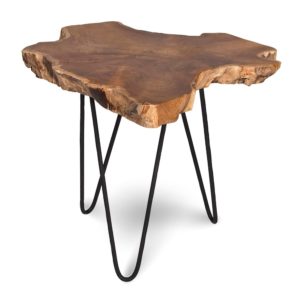
Style In Form Nesting Table Hairpin
$429.00Original price was: $429.00.$349.00Current price is: $349.00. -
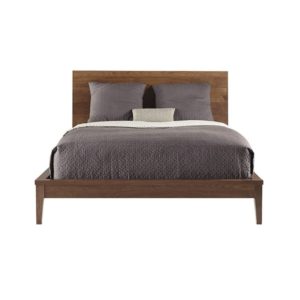
West Bros Serra King Walnut Bed
$3,499.00Original price was: $3,499.00.$2,799.00Current price is: $2,799.00. -
TH Definity Walnut Night Table
$1,499.00Original price was: $1,499.00.$1,199.00Current price is: $1,199.00. -
Ren-Wil Tupper Picture
$549.00Original price was: $549.00.$399.00Current price is: $399.00. -
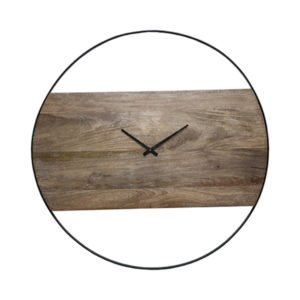
Renwil Amika Clock
$619.00Original price was: $619.00.$489.00Current price is: $489.00. -
Torre & Tagus Flame Sculpture
$159.00Original price was: $159.00.$119.00Current price is: $119.00. -
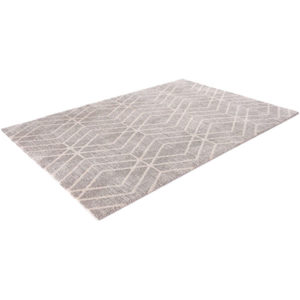
Citak 5X8 Rug Arctic Thatch
$599.00Original price was: $599.00.$449.00Current price is: $449.00.
Why Is Inside Furniture Important for Global Buyers?
Inside Furniture matters because it shapes how people live, work, rest, and welcome others. A sofa, dining table, or bedroom cabinet is not merely a product. It affects comfort, safety, space efficiency, and daily routines. Global buyers therefore examine more than appearance. They assess materials, construction, packaging, durability, and after-sales support.
Industry data supports this wider view. Fortune Business Insights valued the global furniture market at approximately US$516.66 billion in 2023. Its report projects continued growth through 2032, driven by urbanisation, housing development, renovation, and online retail. CSIL’s World Furniture Outlook also describes furniture as a major international manufacturing and trading sector, while highlighting uneven demand across regions. These findings matter for buyers comparing suppliers from different countries. A low factory price may become expensive after freight damage, weak quality control, or complicated returns.
Inside Furniture also reflects changing consumer expectations. Reports from Euromonitor International show stronger interest in responsible consumption, flexible living spaces, and products with longer practical value. Buyers increasingly request certified wood, lower-emission finishes, repairable components, and transparent supply information. Details become visible quickly: a drawer that sticks, a sharp edge under a table, or packaging that fails during a long sea journey.
The category is not perfectly defined. Some reports combine indoor, outdoor, contract, and home-office products. That limitation deserves attention. Reliable purchasing decisions should combine market statistics with factory audits, sample testing, compliance documents, and real customer feedback. For global buyers, Inside Furniture is important because it connects design with measurable performance, responsible sourcing, and long-term trust. Small details often decide whether a shipment succeeds.

Define Indoor Furniture: Functions, Materials, and Global Buyer Needs
Indoor furniture refers to movable pieces designed for enclosed living, working, dining, or hospitality spaces. It includes sofas, beds, tables, chairs, cabinets, and storage units. These products support comfort, organization, privacy, and daily movement. A dining chair must carry weight safely, while a cabinet protects items from dust and damage. Its value is not purely visual. For global buyers, indoor furniture should match room dimensions, user habits, climate conditions, and installation limits. Small errors matter.
Materials strongly influence furniture performance, appearance, maintenance, and cost. Solid wood offers natural grain and repair potential, but moisture can cause swelling or movement. Engineered panels provide consistent sizing and efficient production, though edge protection requires close inspection. Metal frames can improve strength, while coatings need testing against rust and wear. Fabrics should balance softness, color stability, cleaning needs, and abrasion resistance. No material is perfect. A dense surface may resist scratches but feel cold. Buyers should request samples and examine joints, finishes, hardware, and load capacity before approving bulk production.
Global buyer needs also include packaging, assembly instructions, replacement parts, and reliable quality records. Requirements vary across markets, so safety documents and chemical information should be checked against local regulations. Practical procurement depends on clear drawings, agreed tolerances, inspection procedures, and traceable production records. Packaging deserves attention because corners often suffer during long-distance transport. It is easy to overvalue appearance during a showroom visit. A better decision considers daily use, repair difficulty, warehouse conditions, and the furniture’s full service life.
Measure Market Demand: Statista Tracks Global Furniture Revenue Growth
Why Is Indoor Furniture Important for Global Buyers?
Measure Market Demand: Statista Tracks Global Furniture Revenue Growth
Global buyers need more than attractive product photos. Indoor furniture shows how consumers live, work, and use limited space. Statista Market Insights estimated global furniture revenue at US$766.2 billion in 2024. It projects a compound annual growth rate of 3.34% from 2024 to 2029. The signal is clear. Demand continues, but growth is not evenly distributed.
CSIL’s World Furniture Outlook 2024 placed worldwide furniture consumption at roughly US$1.5 trillion. The wider figure reflects different product categories and market definitions. Buyers should notice this difference. Statistics can look inconsistent when reports measure different channels. Demand is uneven. Smaller homes may increase interest in compact tables, modular storage, and multifunctional seating. Meanwhile, higher-income households may prioritize durable materials and visual comfort.
A practical market review should compare revenue, housing activity, retail sales, and import data. Statista’s forecast is useful, but it is not a crystal ball. Inflation, exchange rates, construction cycles, and freight costs can quickly change purchasing plans. One weakness remains. Many reports combine indoor, outdoor, residential, and contract furniture. Global buyers should separate these categories before setting production volumes. That extra check can reveal whether growth is real, temporary, or simply a reporting effect.
Assess Indoor Air: EPA Finds Pollutants Can Reach 2–5× Outdoor Levels
Why Is Inside Furniture Important for Global Buyers?
Assess Indoor Air: EPA Finds Pollutants Can Reach 2–5× Outdoor Levels
Indoor furniture can influence air quality long after installation. Adhesives, coatings, foams, and composite wood may release volatile organic compounds. The U.S. Environmental Protection Agency reports that indoor pollutant levels are often two to five times higher than outdoor levels. Some pollutants can reach much higher concentrations. A new cabinet may look harmless. Its odor may tell another story.
The World Health Organization recommends keeping formaldehyde below 0.1 mg/m³ over 30 minutes. This matters in bedrooms, offices, and tightly sealed apartments. Furniture specifications should identify materials, emissions testing, and ventilation requirements. A certificate helps, but it is not the whole room. Testing methods, aging, humidity, and installation conditions can change results. That gap deserves attention.
Tips: Ask for recent emissions reports, not only material names. Check formaldehyde and VOC results against recognized standards. Let new furniture ventilate before regular use. Keep air moving. Avoid placing large pieces against damp walls. Use low-emission materials where possible. Buyers should also question unclear claims. “Eco-friendly” can be too vague. EPA guidance notes that source control and ventilation work together, yet buyers often focus on appearance first. That is understandable, but incomplete.
Compare Sustainability: UNEP Says Buildings Use 32% of Global Energy
Why Is Inside Furniture Important for Global Buyers?
UNEP’s global buildings assessments place the sector near one-third of worldwide energy use. The cited 32% figure makes the scale tangible. Energy is consumed during construction, heating, cooling, lighting, and daily operation. Interior furniture adds another layer through raw materials, manufacturing, transport, replacement, and disposal. That changes the brief. A chair or cabinet is not only a design object; it carries an environmental history.
The International Energy Agency reports that buildings use about 30% of global final energy and produce roughly 26% of energy-related emissions. These figures mainly describe building operations, so furniture impacts can be overlooked. The Global Resources Outlook 2024 also links rising material extraction with growing environmental pressure. Buyers should therefore request recycled-content evidence, timber traceability, product durability data, and repair guidance. A low-energy building can still contain short-lived interiors.
In real procurement, sustainability claims need practical testing. Examine material samples, edge finishes, hardware, and packaging before approving large volumes. Ask whether damaged parts can be replaced instead of discarding entire units. Environmental Product Declarations can improve comparison, but they are not available for every product or market. Data gaps remain. Certification also does not automatically prove longer service life. Global buyers may need to balance carbon, cost, local availability, and cultural design expectations. That balance is imperfect, yet transparent evidence supports more responsible decisions.
| Comparison Dimension | Verified Data or Benchmark | Relevance to Interior Furniture Buyers | Evidence to Request from Suppliers | Reference |
|---|---|---|---|---|
| Global building-energy context | 32% of global energy use is the UNEP figure cited for buildings in the article context. | Furniture is part of the interior environment and contributes to material demand, replacement cycles, indoor comfort, and the overall sustainability performance of buildings. | Product-level life-cycle assessment, material disclosure, durability information, and end-of-life instructions. | United Nations Environment Programme (UNEP), global buildings and construction assessments. |
| Operational versus embodied impacts | Building-related impacts are divided into operational impacts, such as heating and cooling, and embodied impacts, such as material extraction, manufacturing, transport, and disposal. | As buildings become more energy-efficient, the relative importance of furniture materials and replacement frequency can increase. | Life-cycle assessment covering raw materials, manufacturing, transport, use, and end-of-life stages. | UNEP Global Status Reports; ISO 14040 and ISO 14044 life-cycle assessment standards. |
| Aluminium content | Approximately 95% less energy is required to produce recycled aluminium compared with primary aluminium. | Aluminium frames, legs, handles, and fittings can have a substantially lower production-energy impact when recycled content is verified. | Recycled-content percentage, chain-of-custody documentation, and recycled-material verification. | International Aluminium Institute, aluminium recycling data. |
| Steel content | Around 60% less energy may be used when steel is produced through recycling rather than from virgin raw materials, depending on the production route. | Metal structures and hardware can be designed for lower material impact and easier recovery at the end of the product’s life. | Steel recycled-content declaration, material grade, disassembly instructions, and recyclability information. | World Steel Association, steel recycling and energy comparisons. |
| Indoor formaldehyde exposure | 0.1 mg/m³ is the World Health Organization guideline value for formaldehyde in indoor air, expressed as a 30-minute average. | Composite wood panels, adhesives, coatings, and finishes can affect indoor air quality, especially in enclosed interiors. | Formaldehyde-emission test reports, applicable product-class certification, and technical data for adhesives and coatings. | World Health Organization, WHO Guidelines for Indoor Air Quality: Selected Pollutants. |
| Furniture waste in Europe | The European Environment Agency estimates that the European Union generates approximately 10.78 million tonnes of furniture waste annually. | Longer service life, repairability, refurbishment, and material recovery can reduce landfill and incineration pressure. | Expected service life, repair manuals, spare-parts availability, take-back options, and disassembly time. | European Environment Agency, furniture and circular-economy assessments. |
| Durability and replacement cycle | There is no single globally accepted durability score for all furniture categories. | A durable product can reduce the environmental impact associated with repeated manufacturing, packaging, shipping, and disposal. | Load tests, abrasion resistance, opening-and-closing cycle tests, warranty terms, repair history, and replacement-part policy. | Applicable ISO, EN, or national furniture-performance standards for the specific product type. |
| Material transparency | ISO 14025 provides principles for environmental product declarations, while ISO 14040 and ISO 14044 define life-cycle assessment principles and requirements. | Transparent product data enables global buyers to compare furniture using consistent environmental indicators rather than unsupported marketing claims. | Third-party verified environmental product declaration, product carbon footprint, bill of materials, and manufacturing-country information. | International Organization for Standardization, ISO 14025, ISO 14040, and ISO 14044. |
| Design for disassembly | Design for disassembly is a circular-design practice rather than a single universal numeric benchmark. | Products that can be separated into wood, metal, plastic, foam, and textile components are easier to repair, refurbish, and recycle. | Tool requirements, fastener types, disassembly diagrams, material separation instructions, and component labeling. | International circular-design guidance and relevant product-design standards. |
| Procurement priority | Recommended hierarchy 1. Long service life 2. Low-emission materials 3. Recycled or responsibly sourced content 4. Repairability 5. End-of-life recovery |
Using a consistent hierarchy helps buyers compare products across different countries, material types, and regulatory systems. | Independent certificates, test reports, life-cycle data, material passports, and written environmental claims with defined boundaries. | Best-practice circular procurement principles and international environmental standards. |
Verify Sourcing: FSC-Certified Forests Exceed 160 Million Hectares
Why Is Inside Furniture Important for Global Buyers?
For global buyers, inside furniture means more than visual style. It includes frames, panels, drawers, veneers, and hidden supports. These parts can contain substantial wood volumes. Their origin matters when buyers assess environmental risk, product durability, and supplier reliability.
The FSC Facts and Figures report for 2024 records more than 160 million hectares of FSC-certified forests worldwide. That scale gives buyers a measurable sourcing reference. It also supports better conversations with manufacturers. Ask which components use certified wood. Request valid certificates and transaction records. Check whether certification covers the factory’s actual product scope. Small details matter.
The FAO Global Forest Resources Assessment 2020 reports 4.06 billion hectares of forest globally. However, certified forest area remains a limited share of that total. Certification is useful, but it is not magic. It does not automatically verify every screw, coating, or recycled panel. A practical audit should trace wood from forest source to processor, factory, and shipment. Sampling invoices, delivery notes, and material labels can reveal gaps.
Some suppliers present a certificate as complete proof. That is too simple. Buyers should also review moisture control, joint construction, panel emissions, and packaging practices. The hidden structure deserves inspection. A beautiful surface cannot repair weak internal material. Procurement teams may miss this when deadlines dominate. A stronger approach combines certification data with factory audits and product testing. It costs more time, yet it reduces unpleasant surprises after arrival.
Why Is Inside Furniture Important for Global Buyers?
Verify Sourcing: FSC-Certified Forests Exceed 160 Million Hectares
FSC-certified forests represent more than 160 million hectares, compared with approximately 4.06 billion hectares of global forest area. This comparison helps global furniture buyers evaluate responsible sourcing and traceability in wood-based interior products.
Sources: FAO Global Forest Resources Assessment 2020; FSC public certification statistics. FSC-certified area is shown as the reported minimum of 160 million hectares.
Related Posts
-
7 Best Inside Furniture Suppliers for Global Buyers
-

How to Choose Room Furniture for Your Home?
-
Top 10 Quality Furniture Suppliers for Global Buyers
-
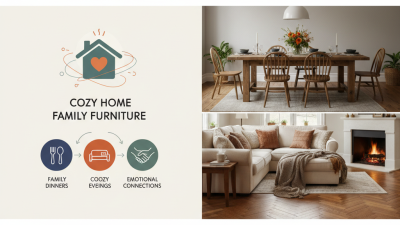
Why Choosing the Right Family Furniture is Essential for a Cozy Home
-

Navigating Tariff Challenges with Top Quality Furniture from China on the Rise
-

Top Furniture Styles to Transform Your Home in 2025